ASEAN mulls sharing fuel, food resources as fears of prolonged disruptions grow
Amid Middle East tensions, ASEAN proposed establishing a regional fuel stockpile and food security arrangements. Leaders stressed strengthening coordination, diversifying energy sources, and improving intra-regional trade to manage global supply risks effectively.
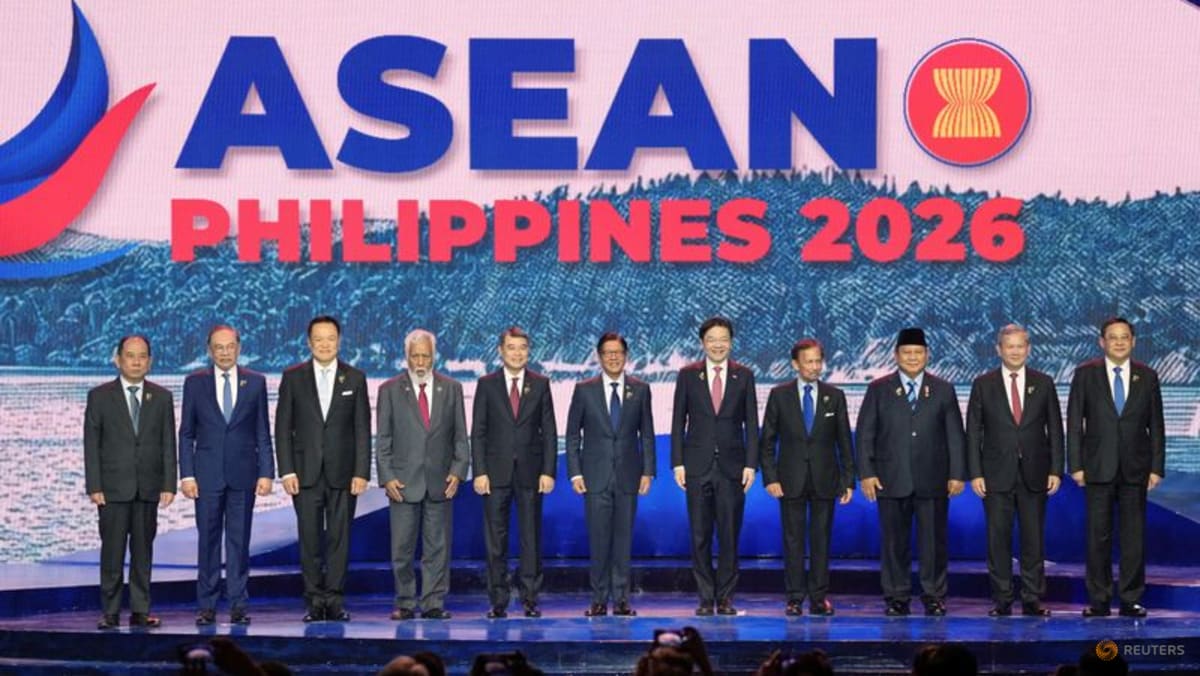
CEBU: A regional fuel stockpile and a standby arrangement for food security were among measures proposed on Friday () at the Association of Southeast Asian Nations (ASEAN) Summit, as member countries continue to grapple with the impact of the Middle East conflict.
Philippine President Ferdinand Marcos Jr, the 2026 chair of the 11-member bloc, urged member states to pursue “practical cooperation” in an increasingly uncertain world.
Prolonged closure of the Strait of Hormuz - the waterway through which Asia obtains a significant share of its oil and gas - in the Middle East war has strained energy and fertiliser supplies, raising prices and threatening livelihoods.
“At a time of heightened volatility, ASEAN must strengthen coordination and reinforce preparedness, (and) pursue practical collective measures to safeguard a stable energy supply and improve interconnectivity,” Marcos said in his opening remarks at the plenary.
On the regional fuel stockpile, Marcos told the media after the summit that ASEAN leaders had discussed a "mechanism" for having a "reservoir" of different fuel products that can be shared among member states.
"The situation right now is very different for each country. Some countries have a surplus of a certain kind of fuel. Other people have a shortage, and we're trying to balance that out," he said at a press conference.
"And when something like this happens - a war happens and a trade route like the Strait of Hormuz is closed with all the attendant effects - we have somewhere to immediately run to for emergency supply."
In a joint declaration released on Saturday, ASEAN member states expressed "serious concern over the escalation of conflict in the Middle East", stating that the conflict posed a "grave threat" to the lives and safety of civilians, as well as to regional and global peace and stability.
"We call on all countries to respect international law, including the Charter of the United Nations," the declaration said, mentioning Israel, the United States and Iran by name as well as listing in full the Gulf nations that have been targeted by Tehran's retaliatory attacks.
The declaration did, however, reaffirm the importance of "navigational rights and freedoms" enshrined in the United Nations Convention on the Law of the Sea (UNCLOS), including the right of transit passage in straits used for international navigation.
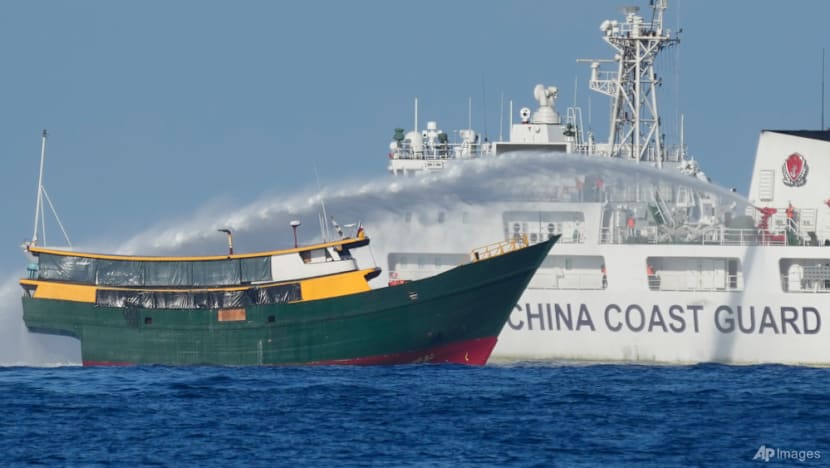
This includes freedom of navigation in and overflight above the South China Sea, ASEAN said, as it welcomed "progress" in ongoing negotiations on a code of conduct in the resource-rich waterway.
The declaration also highlighted the planned establishment of the ASEAN Maritime Centre in the Philippines, noting that it will support the work of ASEAN and ASEAN-led mechanisms on maritime-related issues and promote cross-sectoral and cross-pillar collaboration among ASEAN member states.
In response to a question on sensitivities with China, Marcos told reporters that Manila's proposal for the centre was aimed at protecting freedom of navigation in the South China Sea and "not to confront or not to somehow push back on any single force or any single country".
BOOSTING ENERGY SECURITY
On Thursday, Malaysia’s Investment, Trade and Industry Minister Johari Ghani reportedly said that ASEAN is exploring the possibility of establishing a regional fuel stockpile to improve resilience against future supply disruptions.
Malaysia Prime Minister Anwar Ibrahim said on Friday ASEAN must recognise that strategic collaboration with trusted partners and regional groupings can strengthen ASEAN’s long-term energy security.
“In this context, ASEAN should fully leverage cooperation with the Gulf Cooperation Council (GCC), including the broader ASEAN-GCC-China nexus, to build more reliable and resilient energy arrangements,” he said in his plenary remarks.
Anwar on Friday reiterated ASEAN’s need to diversify fossil fuel sources and reduce over-dependence on vulnerable supply chains, noting that restoring “order” in trade routes and energy prices could take up to 18 months, depending on geopolitical developments.
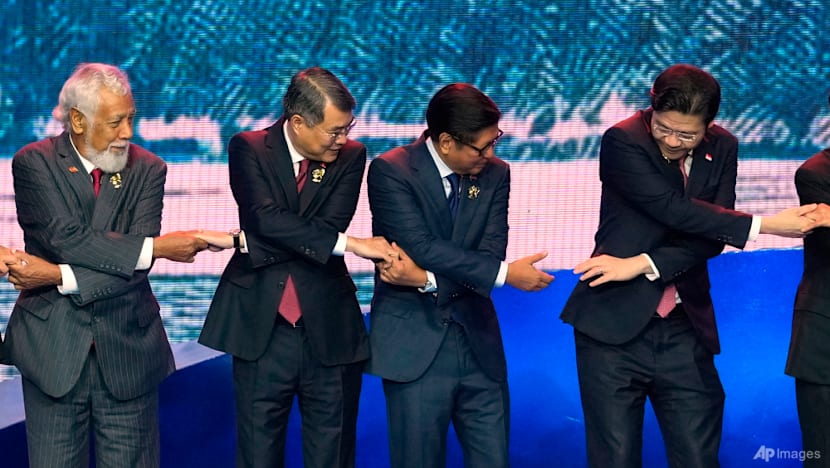
Singapore Prime Minister Lawrence Wong cautioned that even if the Strait of Hormuz were opened tomorrow, it would take at least months for damaged infrastructure to be repaired and for goods to flow again.
ASEAN should reinforce its collective energy security and work towards “swift ratification” of the ASEAN Petroleum Security Agreement as another tool to tackle energy crises, he said.
CALL TO STRENGTHEN FOOD SECURITY ARRANGEMENT
On food security, Anwar proposed exploring a “regional standby arrangement for food security” during crises.
“The energy crisis is already feeding directly into food insecurity. Higher fuel prices are raising fertiliser, transport and production costs, creating immediate supply pressures across the region,” he said.
Anwar also suggested strengthening the ASEAN Plus Three Emergency Rice Reserve mechanism by expanding it to include fertilisers.
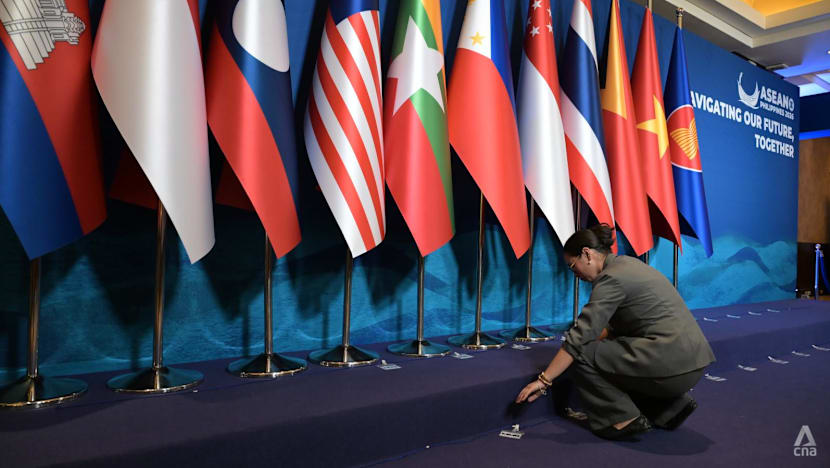
Singapore’s Wong said intra-ASEAN supply chains should be strengthened, especially for critical goods like food.
“The upgraded ASEAN Trade in Goods Agreement (ATIGA) is actually timely, because it reduces non-tariff barriers to food trade and encourages the exchange of food safety information,” he said.
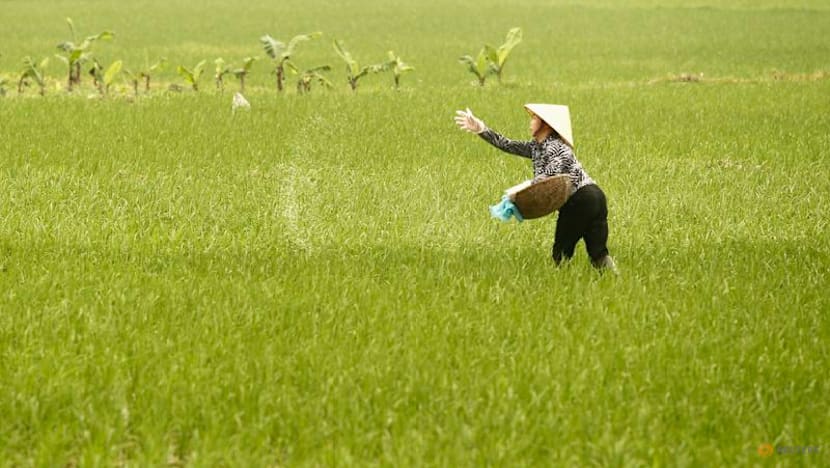
Marcos said the closure of the Strait of Hormuz has “quickly affected” food prices and supply, especially of fertilisers, and the welfare of ASEAN residents.
Indonesian President Prabowo Subianto urged ASEAN countries to accelerate energy diversification, saying it was no longer optional but “necessary”.
Later on Friday during the leaders’ retreat, Thailand Prime Minister Anutin Charnvirakul urged member states to move beyond national positions, prioritise collective regional interests, and translate them into concrete actions.
source: CNA https://www.channelnewsasia.com/asia/asean-summit-energy-food-security-stockpile-6109526