Commentary: US ‘transshipment scam’ narrative raises troubling prospect of a purity test for Southeast Asia
The US's "transshipment scam" narrative threatens Southeast Asian trade, raising the prospect of strict "purity tests" on Chinese components and increased tariffs.
If the US sees all trade as a potential scam, trading partners would do well to prepare for more tariffs, says Hinrich Foundation’s Deborah Elms.
Deborah Elms
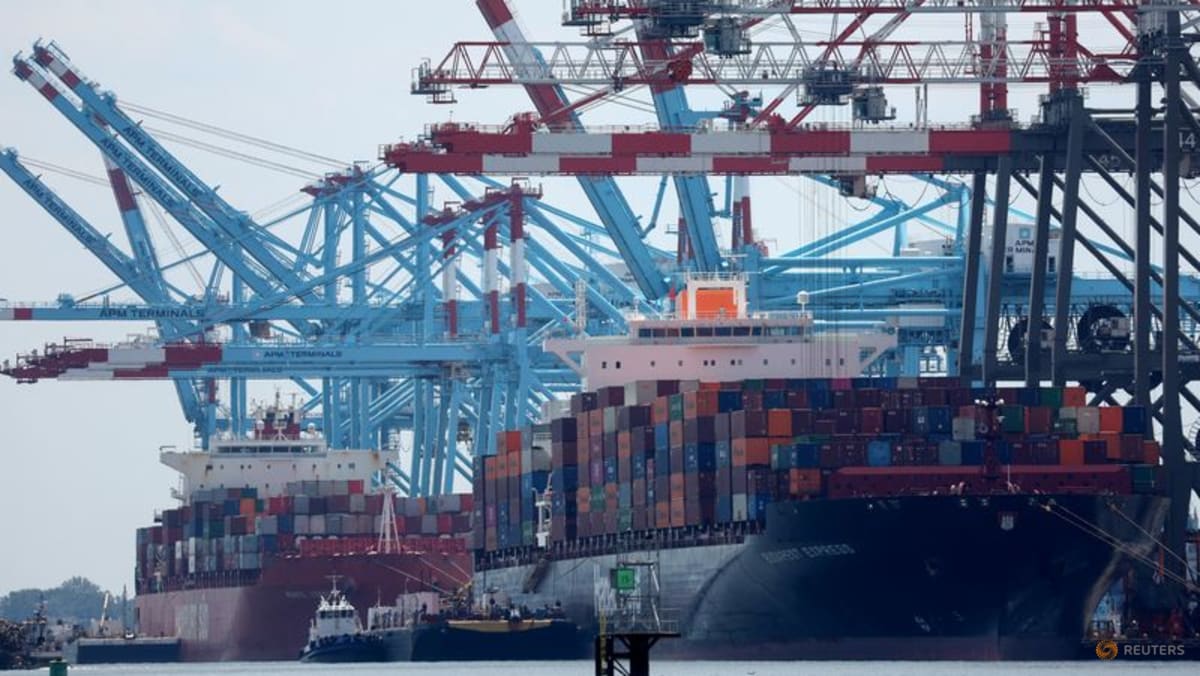
SINGAPORE: If the United States were simply arguing against illegal transshipment, there would be little objection across Asia. Governments in the region have taken steps to clamp down and eliminate the practice for years.
But the Trump administration seems to be going much further, accusing more than 40 countries, including nine in Southeast Asia, of participating in a “Great Transshipment Scam”. For the world’s largest economy, all trade is a potential scam.
The White House argued precisely that in an August report, written by trade adviser Peter Navarro. He painted a picture of a global network designed to sneak Chinese goods into the US by routing them through third-country markets to evade American tariffs. Every year, the report claims, the US “loses tens of billions of dollars” to illegal transshipment.
But its definition of problematic trade seems to be widening and raises the troubling prospect of a new kind of “purity test”.
BLURRED LINES
Washington may be blurring the line between legitimate supply chain shifts and illegal tariff evasion.
Illegal transshipment largely involves re-labelling goods without any change to the products, such as using fraudulent paperwork to indicate that items originated in a different market. These moves have always been illegal.
By contrast, companies legally engage in trade by substantially transforming goods from raw materials, parts and components sourced from anywhere into new products. The US supported this diversification of trade flows in the past.
The question was what counted as substantial to be considered as being made in that country. This is not a new concern. American border agencies have spent decades issuing specific rulings on how to achieve legal transformation.
A key difference is that past administrations looked into individual company practices, such as the movement of solar panels through Southeast Asia, to determine whether trade patterns were legitimate or simply a pathway to evade US tariffs.
US HELPED CREATE THE CURRENT SITUATION
The irony is that Washington helped create what it now distrusts.
Despite the White House’s claims of widespread cheating, firms have reshuffled trade arrangements into the US mostly because of growing gaps in its tariff application across the region.
When identical products are charged different tariffs, some companies have an incentive to move production across borders to keep costs low. Under the current tariff structure, an identical t-shirt imported from Laos could be tariff-free, receive a 10 per cent tariff if it came from Cambodia and 12.5 per cent if sent from the Philippines.
During President Donald Trump’s first term in office, he raised tariff levels for goods imported from China to high enough levels to push firms to diversify out of China and into the region.
This strategy, often called “China plus one”, often served firms well and drove inbound investment across Southeast Asia. Now, however, these activities are increasingly being called into question.
%3C/em%3E%3C/p%3E%3Cp%3EAnd%20the%20problem%20of%20differential%20tariffs%20will%20only%20become%20more%20complex%20with%20ongoing%20US%20policy%20changes.%20Section%20301%20tariffs,%20of%20either%2010%20per%20cent%20or%2012.5%20per%20cent,%20are%20now%20in%20place%20against%2060%20different%20trade%20partners%20over%20forced%20labour%20practices.%20Another%20Section%20301%20probe%20is%20pending%20conclusion%20against%2016%20economies%20for%20overcapacity%20issues.%3C/p%3E%3Ch2%3ENOT%20JUST%20ABOUT%20CHINESE%20COMPONENTS%3C/h2%3E%3Cp%3EBut%20shifting%20parts%20of%20the%20supply%20chain%20out%20of%20China%20may%20no%20longer%20be%20enough%20if%20Washington%E2%80%99s%20fight%20against%20illegal%20transshipment%20becomes%20heavily%20fixated%20on%20Chinese%20connections.%3C/p%3E%3Cp%3EThe%20White%20House%20report%20highlighted%20Vietnam%E2%80%99s%20electronics%20sector%20in%20Ho%20Chi%20Minh%20City%20and%20Malaysia%E2%80%99s%20plastic%20manufacturing%20in%20Penang%20as%20evidence%20of%20%E2%80%9Cugly%20sister%20cities%E2%80%9D%20taking%20jobs%20from%20American%20workers.%20It%20also%20specifically%20called%20out%20Singapore%20as%20part%20of%20an%20alleged%20scheme%20to%20move%20Chinese%20goods%20through%20%E2%80%9Csmall,%20opportunistic%E2%80%9D%20actions%20in%20logistics%20that%20allow%20China-linked%20rerouting%20of%20goods.%3C/p%3E%3Cp%3EThe%20US%20appears%20ready%20to%20ask%20trade%20partners%20to%20exclude%20a%20wide%20and%20growing%20array%20of%20Chinese%20raw%20materials,%20parts%20and%20components%20in%20any%20product%20that%20might%20eventually%20arrive%20in%20the%20United%20States.%20These%20concerns%20have%20been%20raised%20in%20bilateral%20consultations.%3C/p%3E%3Cp%3EAt%20the%20same%20time,%20the%20US%20is%20also%20taking%20steps%20to%20dramatically%20transform%20the%20operations%20of%20US%20customs.%20This%20includes%20requesting%20significantly%20more%20information%20about%20imported%20goods%20and%20much%20deeper%20tracking%20and%20tracing%20of%20goods%20back,%20potentially,%20to%20raw%20materials.%3C/p%3E%3Cp%3EThe%20increasing%20use%20of%20technological%20solutions%20to%20support%20customs%20declarations%20on%20imported%20goods%20could%20also%20be%20used%20to%20request%20information%20about%20Chinese%20content,%20investment%20or%20corporate%20involvement%20in%20the%20production%20of%20goods.%3C/p%3E%3Cp%3EThese%20concerns%20have%20been%20raised%20repeatedly%20by%20the%20US%20in%20bilateral%20consultations%20with%20trade%20partners.%20The%20same%20sentiment%20was%20just%20raised%20by%20US%20Treasury%20Secretary%20Scott%20Bessent%20with%20his%20recent%20comment%20that%20%E2%80%9Cthe%20rest%20of%20the%20world%20is%20going%20to%20have%20to%20examine%20their%20terms%20of%20trade%20with%20China%E2%80%9D.%3C/p%3E%3Cp%3EAsian%20partners%20have%20repeatedly%20expressed%20concerns%20about%20exactly%20how%20such%20examination%20will%20be%20conducted%20and%20what%20sort%20of%20%E2%80%9Cinvolvement%E2%80%9D%20by%20China%20is%20actually%20on%20the%20table.%3C/p%3E%3Cp%3EGiven%20the%20reliance%20on%20Chinese%20inputs%20in%20most%20Asian%20supply%20chains,%20US%20actions%20could%20significantly%20alter%20existing%20production%20patterns.%20The%20dense%20production%20and%20logistics%20networks%20crossing%20Singapore%20and%20Southeast%20Asia%20will%20be%20hard%20to%20undo.%3C/p%3E%3Cp%3EIncreasing%20scrutiny%20could%20quickly%20devolve%20into%20some%20sort%20of%20%E2%80%9Cpurity%20test%E2%80%9D%20for%20goods.%3C/p%3E%3Ch2%3EPREPARE%20TO%20FACE%20SECTION%20338%3C/h2%3E%3Cp%3EAnd%20Mr%20Trump%20now%20has%20more%20tariff%20weapons%20in%20his%20arsenal.%20Besides%20Section%20301,%20he%20also%20recently%20imposed%20tariffs%20on%20Canada%20using%20an%20obscure%20trade%20tool%20called%20Section%20338%20that%20has%20not%20been%20used%20since%20its%20creation%20in%201930.%20On%20Tuesday%20(Sep%208),%20he%20used%20the%20same%20law%20to%20ban%20certain%20Canadian%20imports%20entirely%20and%20subject%20more%20goods%20to%20a%2050%20per%20cent%20tariff.%3C/p%3E%3Cp%3EUnder%20Section%20338,%20a%20US%20president%20can%20impose%20tariffs%20of%20up%20to%2050%20per%20cent%20on%20trade%20partners%20with%20no%20process%20or%20procedures%20to%20be%20followed%20and%20no%20review%20of%20the%20action%20to%20be%20taken%20by%20Congress.%3C/p%3E%3Cp%3EGiven%20Mr%20Trump%E2%80%99s%20personal%20obsession%20with%20bilateral%20trade%20deficits%20in%20goods,%20countries%20named%20in%20this%20transshipment%20report%20that%20export%20more%20to%20the%20US%20than%20they%20import%20would%20do%20well%20to%20prepare%20to%20face%20Section%20338.%3C/p%3E%3Cp%3EThe%20use%20of%20novel%20trade%20tools%20against%20allies%20and%20adversaries%20alike,%20paired%20with%20a%20narrative%20that%20conflates%20all%20trade%20with%20scam%20activities,%20suggests%20that%20Asia%20will%20continue%20to%20see%20extremely%20turbulent%20trade%20ties%20with%20the%20United%20States.%3C/p%3E%3Cp%3EThe%20signs%20to%20watch%20will%20be%20how%20the%20sweeping%20claims%20in%20the%20transshipment%20report%20will%20translate%20into%20actual%20trade%20action.%3C/p%3E%3Cp%3E%3Cem%3EDeborah%20Elms%20is%20Head%20of%20Trade%20Policy%20at%20the%20Hinrich%20Foundation.%3C/em%3E%3C/p%3E%3Cp%3E%3Ci%3Esource:%20CNA%3C/i%3E%20%20%3Ca%20href=)
https://www.channelnewsasia.com/commentary/us-tariffs-trade-scam-china-southeast-asia-6369666