Final vote results in Israel set up weeks of uncertainty about who will govern
Final results in Israel show Netanyahu’s coalition and opposition both short of 61 seats, setting up prolonged coalition talks.
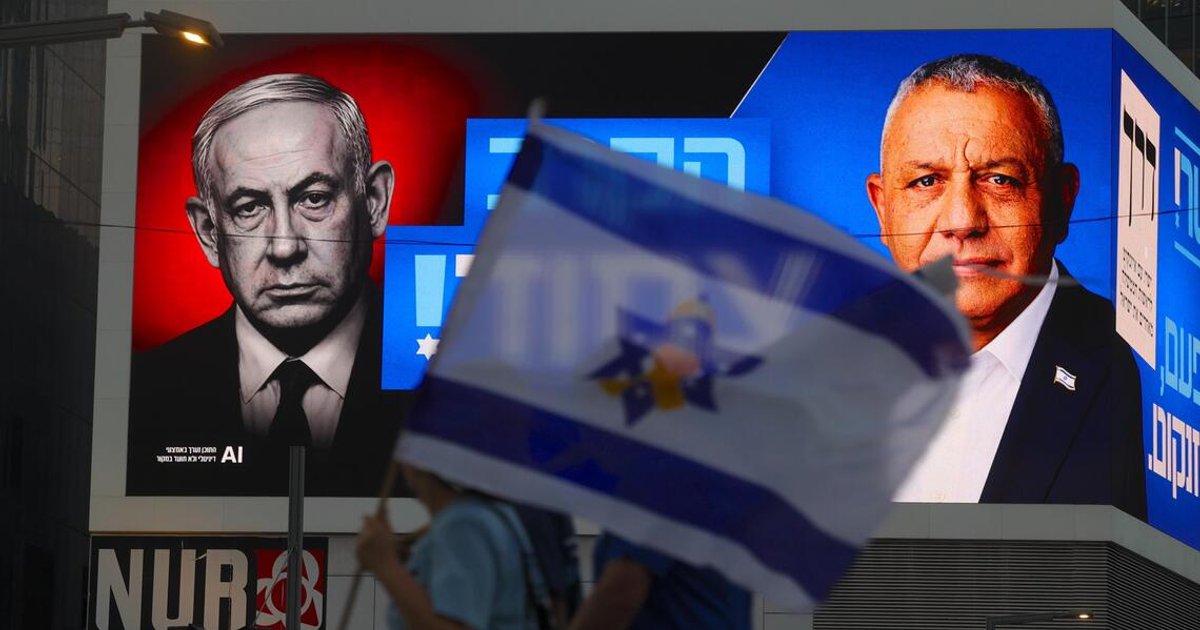
JERUSALEM – The final vote count in Israel’s election, released early on Oct 30, confirmed that neither Prime Minister Benjamin Netanyahu’s hard-right coalition nor the main opposition alliance won enough votes to form a government.
The result sets the stage for weeks of jockeying and political uncertainty.
Netanyahu’s Likud party and its hard-right allies won 53 seats in Parliament, not enough to meet the 61-seat threshold for an outright majority.
The final count, from Israel’s Central Elections Committee, showed Netanyahu’s alliance was down from the 64 seats it won in the last election, in 2022.
The main opposition bloc, led by Gadi Eisenkot, a former military chief who had led in opinion polls for months, won 48.
Two Arab parties secured 19 seats, their highest-ever number of seats.
The results are subject to potential “minor corrections” in coming days before they are submitted to Israeli President Isaac Herzog on Nov 4, the committee said just after midnight.
Herzog will decide who he thinks has the best shot at assembling a majority and ask that person to try to form a government.
Herzog has said he will consult party leaders after formally receiving the vote count next week.
The final seat tally will be formalised on Nov 4, and the political parties will be able to file complaints and legal challenges until Nov 18.
Herzog is likely to offer Eisenkot the first chance to form a government, said Assaf Shapira of the Israel Democracy Institute in Jerusalem, a non-partisan research group.
Based on Israeli law, and past elections, the party leader who receives the most recommendations from the other leaders who consult the President is generally given priority, he said.
The election was widely considered a referendum on Netanyahu, Israel’s longest-serving prime minister, and his government, the most hard-right in Israeli history.
It was also the first vote since the Hamas-led attack on Oct 7, 2023, the deadliest day in Israeli history, that ignited the devastating war in the Gaza Strip.
Voter turnout was the highest since 1999, but despite widespread public anger over Netanyahu’s refusal to take responsibility for preventing the Oct 7 attacks, the Jewish-led opposition parties failed to secure enough seats to immediately oust him.
Netanyahu outperformed expectations, playing on voters’ fears of Arab political power and potential security threats to win the most votes.
Eisenkot had presented himself as a foil to Netanyahu throughout the campaign, arguing that the Prime Minister was pushing the country toward authoritarianism and destroying its international standing.
Netanyahu’s edge in Parliament presents Eisenkot and his ideologically diverse bloc with a difficult choice: Seek an alliance with Arab parties to topple him or join forces with Netanyahu in a potential unity government.
The process to form a government could be bitter and drawn out, lasting weeks if not months.
Once Herzog selects a candidate, that person has 28 days to negotiate with other factions to try to assemble a governing majority.
A 14-day extension to the deadline can also be requested.
If the first candidate fails, the President can task up to two others to try to form a government.
If they also fall short, new elections will be held.
Herzog, however, said on Oct 28 that everything possible must be done to avoid another election.
Historically, it has typically taken between 20 and 100 days to form a government, according to the Israel Democracy Institute.
A number of scenarios have been floated, in addition to a national unity government.
Another is that the opposition bloc reaches out to the Arab parties, whose strong showing could make them major players in the negotiations for the next government.
But most Jewish parties, including those in the opposition bloc, are not keen on that approach.
Many Israeli Jews have long objected to including Arab parties – especially those that are unwilling to back Zionist positions – in any governing coalition.
Both leaders could also try to get parties or individual lawmakers to defect from the rival bloc.
Since the Oct 7 attack, views towards Arab parties have hardened.
Netanyahu repeatedly invoked the spectre of Arab voters throughout his campaign, accusing them of “trying to steal the elections” and galvanising his right-wing base with racially charged language.
For his part, Eisenkot has largely declined to say whether he would partner Arab parties, but he has said that none of them meet his conditions for joining forces as potential coalition allies.
A deadlock in political negotiations would suit Netanyahu, analysts say, as he would remain caretaker prime minister until the next government is formed.
For many voters, the election result threatens an uncomfortable prospect: A return to the political deadlock that paralysed Israel between 2019 and 2022, when voters headed to the polls five times.
While many supporters of Netanyahu are relieved that he still has a chance to retain power, others who had hoped for his decisive defeat have felt crushed by the possibility of a political stalemate.
Source: The Straits Times https://www.straitstimes.com/world/middle-east/final-vote-results-in-israel-set-up-weeks-of-uncertainty-about-who-will-govern