Singapore’s manufacturing needs more than an AI updraft
Singapore’s manufacturing sector must move beyond AI-driven cyclical gains. To ensure long-term resilience, firms should prioritize structural capabilities, manage rising costs, adopt regional twinning strategies, and accelerate SME digital transformation.
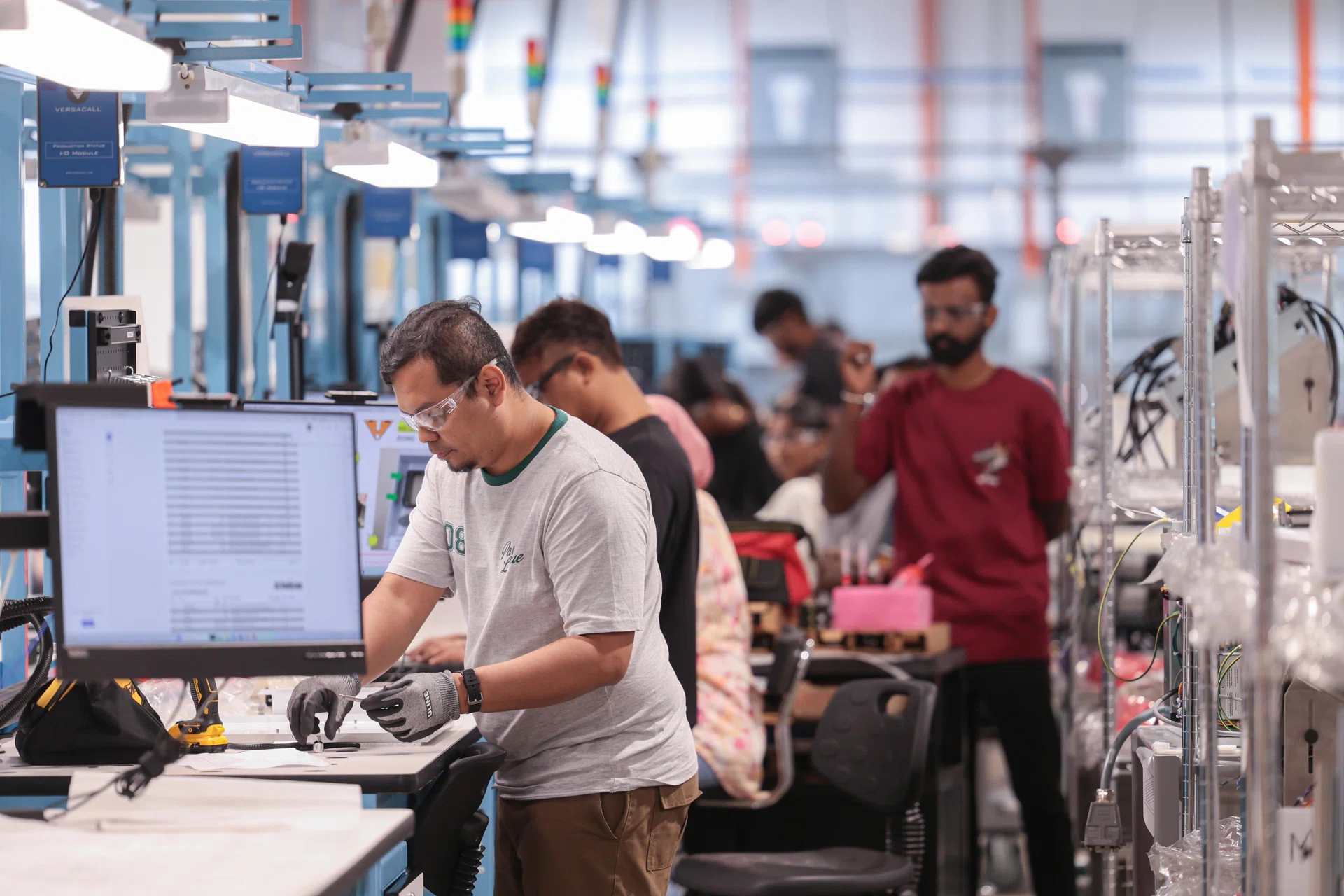
The current boom is real but narrow. The industry must turn the cyclical windfall into structural capability
SUSTAINED global artificial intelligence demand pushed the electronics cluster to output growth of 21.3 per cent year on year in June.
A weighted 24 per cent of manufacturers expect better conditions in the second half, and the 2026 manufacturing growth forecast has been lifted to around 9 per cent after industrial production averaged 9.9 per cent growth in the first half.
The numbers suggest this is one of the strongest years the sector has had in a decade.
But in contrast to electronics, general manufacturing contracted 6.8 per cent in June. This cluster remains the most cautious about the months ahead, citing materials, fuel and freight costs.
Instead of also reflecting the health of the nearly 10,000 manufacturing enterprises beneath it, the headline index is now skewed by a single cluster’s performance.
Two consequences follow.
First, policy, financing and public sentiment calibrated to the average will systematically misread the majority of firms outside the updraft.
Second, AI capital expenditure is itself cyclical. The same demand that lifted the sector can slow, and forecasters are already flagging it as the principal downside risk to Singapore’s electronics orders.
To ensure the continued success of our manufacturing sector, policy and industry action must ensure that no cluster is left behind and build the necessary capabilities for our manufacturers to stay resilient when the cycle inevitably turns.
Treating resilience cost as a permanent line item
The trading environment has changed in a way that will outlast any one administration. Shifting specificities on global trade tariffs means that market access is increasingly priced politically rather than economically.
For manufacturers, this shows up as a resilience cost, which is the standing cost of dual sourcing, duplicated inventory, second-site qualification, origin documentation, customs advisory and compliance headcount.
This is not a shock to be absorbed and forgotten, but a permanent margin line. Companies that budget for it will price their products properly and hold their margins.
Boards should treat the resilience cost as a dedicated line item in management accounts and review it with the same rigour applied to energy or labour.
Reframing how new location strategies are viewed
Rising costs and supply chain fragmentation have prompted many members to rethink where each part of their operation should sit.
This trend has been most visible in the F&B sector, where several established Singapore manufacturers recently announced production moves to Johor Bahru. Rather than viewing such moves as a vote against Singapore, they represent a rightsizing of geography.
Companies are keeping headquarters, brand and product development, process engineering, first-article qualification and supply chain orchestration in Singapore, while placing cost-sensitive volume production nearby.
This “Singapore plus one” strategy mirrors the “twinning” logic written into the Johor-Singapore Special Economic Zone (JS-SEZ) agreement.
Companies that adopt this approach effectively do not shrink their Singapore operations; they effectively upgrade them because what stays behind is the higher-value work.
Two cautionary points arise from Singapore Manufacturing Federation (SMF) members’ actual experience.
One, rules of origin matter: Goods wholly manufactured in Johor do not become Singapore-origin, which matters wherever customers, tenders or free trade agreements specify origin. For effective twinning, companies must design their operational plan with the target country of origin in mind; this cannot be fixed after the plant is built.
Two, the JS-SEZ is an investment proposition, not a single, unified regulatory space. Tax, labour and compliance regimes remain distinct.This is why a practical playbook approach to navigate the JS-SEZ provides organisations much stronger aid than general encouragement.
Enabling the transition from AI tools to AI enterprises
AI is driving demand across semiconductors, advanced electronics and precision engineering, but implementation varies widely.
For employees, adoption can be as simple as drafting an e-mail or summarising a report. For the enterprise, it touches data governance, systems, workflows and ultimately strategy.
That matters greatly as the manufacturing sector faces unique daily challenges, with factories running on tight teams, strict shift schedules, and continuous production lines. Certain roles also require highly skilled engineers or specialised technical staff that are not easily replaceable.
Considering the government’s recent National Day Rally announcement on the increase in childcare leave days and the S$500 per day reimbursement cap, AI would likely play an even bigger role for companies in easing manpower gaps, enabling dynamic rescheduling and building operational redundancy to keep production lines running smoothly.
Yet, Singapore’s small and medium-sized enterprise (SME) manufacturers lag regional peers in employing AI: Research from the Institute of Policy Studies found most local SMEs have automated only up to a quarter of their business processes, with none indicating plans for full automation.
From conversations with SMF members, four barriers are consistently cited:
- Implementation costs: Investments range from roughly US$10,000 to US$200,000 for SMEs and can exceed US$1 million for mid-sized firms. Even though government support can offset 50 to 70 per cent of implementation costs, the net expense remains hard to justify alongside rising labour, energy and operating costs.
- Knowledge and confidence: With technology changing monthly, many manufacturers cannot confidently identify where AI will pay off, or which vendor is telling the truth.
- Governance: Members hold confidential client specifications, production data and proprietary processes that cannot leave their systems. That rules out most consumer tools and demands real planning around data security, architecture and vendor selection before anything is switched on.
- Workforce readiness: Without the capability to work alongside these systems, even well-chosen technology under-delivers.
Most stalled AI projects fail because the company has no clean, structured, permissioned data about its own operations. The cheapest and most underrated first move in any manufacturing AI journey is to instrument and document the process before buying anything at all.
Two other structural considerations matter more than any single grant.
An active industry catalyst is required to drive adoption among local manufacturing SMEs. Sector bodies such as SMF must engage manufacturers directly to identify operational bottlenecks, provide targeted advisory, and match SMEs with suitable AI solutions, translating interest into deployment.
Next, adopting a “problem co-ownership” model aligns incentives by requiring solution providers to share delivery risk and tie payments to operational outcomes rather than vendor software licences.
While outcome-based procurement may be less common than standard subscription licensing among SMEs, shifting towards risk-sharing models is vital to help pilots scale – instead of collapsing once government subsidies end.
Towards SG100: manufacturing’s next chapter
Manufacturing is still often perceived as dirty, backward work. That picture is decades out of date.
The sector now sits at the front line of AI, robotics, automation and data analytics, with growing demand for equipment automation engineers, data analysts, robotics specialists and process optimisation professionals.
The government can fund capability-building efforts and schools can supply the skills, but only employers can show what a modern manufacturing career actually looks like.
This requires redefining roles to reflect their digital and problem-solving reality, making progression pathways visible, and modernising the workplace itself, from offering greater flexibility and well-being support to everyday digital tools that shape job quality.
A simpler approach is transparency: Open the doors and allow progress to be seen. This is where events that showcase the sector’s capabilities and achievements to the general public – especially parents and students – can help shift perceptions.
Export controls, tariffs and restrictions on critical materials will likely continue to complicate costs and access to essential supplies.
As a small state, Singapore cannot compete on scale and can only win by being indispensable and trusted.
That means employing strategies anchored to on-ground realities, ensuring operational agility, and creating real pathways for the next chapter of manufacturing to flourish.
source: The Business Times https://www.businesstimes.com.sg/opinion-features/singapores-manufacturing-needs-more-ai-updraft