More S’pore residents have no religion in 2025 than in 2020
Singapore's non-religious population rose from 20% in 2020 to 23.9% in 2025. Major faiths like Buddhism, Christianity, and Islam all declined significantly according to the latest survey data. Hinduism was the only religion noted to slightly increase its share among residents.
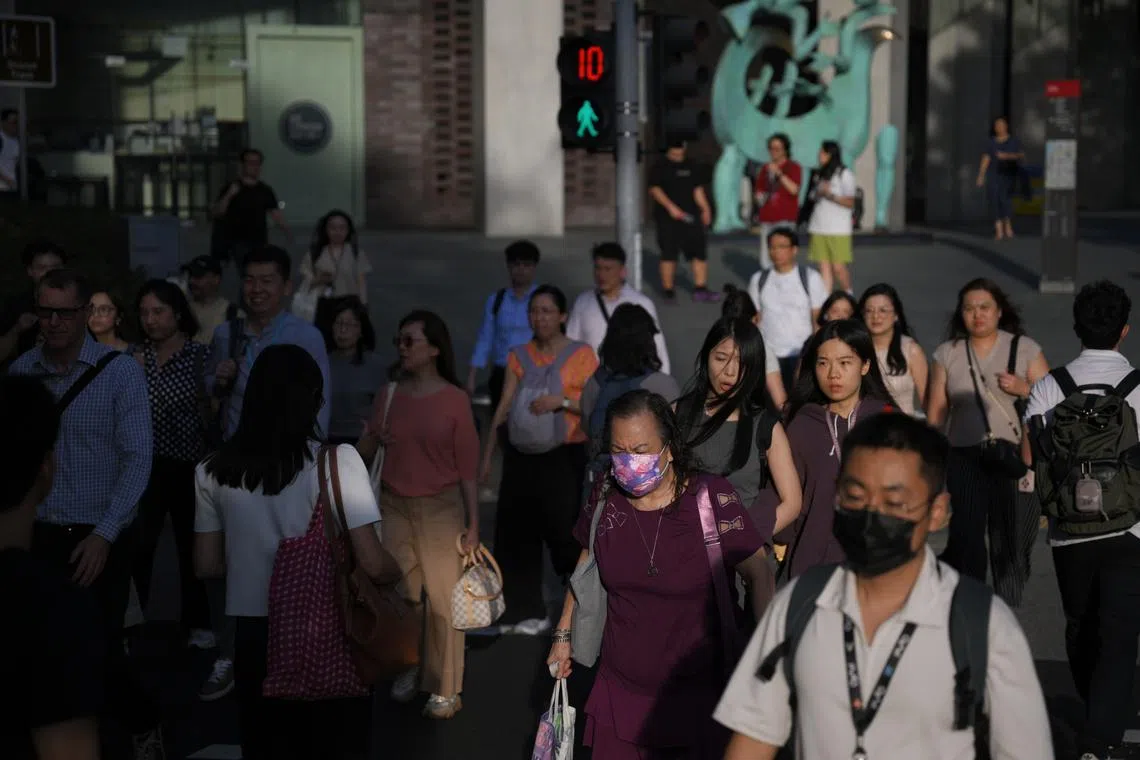
The number of people with no religious affiliation grew from 20% in 2020 to 23.9% in 2025.
ST PHOTO: MARK CHEONG
Christine Tan
Published
Updated Jun 30, 2026, 04:13 PM
- The proportion of Singapore residents with no religious affiliation rose to 23.9% in 2025, up from 20% in 2020, showing a decade-long upward trend.
- Buddhism, Taoism, Christianity, and Islam all declined in follower share, while Hinduism slightly increased from 5% to 5.4%.
- English use at home increased to nearly 60%, while use of Chinese dialects, Mandarin, Malay, and Tamil declined, despite rising bilingual literacy across ethnic groups.
SINGAPORE – About one in four Singapore residents now has no religious affiliation, up from one in five in 2020.
This upward trend has been continuing for more than a decade, according to numbers on Singapore’s religious diversity tracked by the Department of Statistics.
Its latest General Household Survey 2025, released on June 30, showed that 23.9 per cent of residents did not have religious affiliation in 2025, up from 20 per cent in 2020. The figure was 17 per cent in 2010.
The 3.9 percentage point uptick among the non-religious was the most notable change in the data on religion in Singapore.
The survey also noted a general decline in the proportions of those identifying with Buddhism, Taoism, Christianity, and Islam among residents aged 15 years and above.
The only one bucking the trend was Hinduism, which grew from 5 per cent to 5.4 per cent.
The General Household Survey, published by SingStat between the population censuses, provides a snapshot of Singapore’s population and household trends. The last survey was released in 2015.
Population censuses are carried out every 10 years, with the most recent held in 2020.
Statistics from the General Household Survey show Singapore’s religious composition as 30.9 per cent Buddhist, 7.3 per cent Taoist, 17.1 per cent Christian, 15 per cent Muslim and 5.4 per cent Hindu.
Those with no religious affiliation increased across all educational attainment levels, regardless of whether individuals had below secondary school qualifications or university degrees.
Among those with university qualifications, the proportion of Christians saw the most significant decline from 28.3 per cent in 2020 to 24.9 per cent in 2025.
Younger residents were more likely than older ones to have no religion: 26.8 per cent of those between 15 and 24 identified had no religious affiliation, compared with 19.4 per cent of those aged 55 and over.
The most significant increase in the proportion of residents with no religion was among those aged between 35 and 44 years old, rising 6.7 percentage points from 22.3 per cent in 2020 to 29 per cent in 2025.
Those with no religion also increased considerably among Chinese residents, from about one in four in 2020 to around one in three in 2025. Among the Chinese ethnic group, Buddhism remained the most commonly practised religion.
Among Malay residents, the Muslim proportion remained near universal at 98.6 per cent in 2025, while Hinduism was still the most common religion among Indian residents at 58.8 per cent.
Drop in Chinese dialect use
English was the most frequently spoken language in Singapore homes, and this trend was more prevalent among younger residents and those with higher qualifications.
Close to six in 10 residents above the age of five spoke English most frequently at home, up from 48.3 per cent in 2020.
In that same period, the proportions of residents who spoke other languages and dialects, including Mandarin, Malay and Tamil, most frequently at home all declined.
For example, those who said they spoke Chinese dialects most frequently at home decreased from 8.7 per cent in 2020 to 4.9 per cent in 2025.
However, bilingual literacy, or the ability to read in English and at least one mother tongue language, increased across the three major ethnic groups.
source: The Straits Times https://www.straitstimes.com/singapore/more-spore-residents-have-no-religion-in-2025-than-in-2020?ref=top-stories