Negeri Sembilan goes to the polls: The coalitions, the conflicts, and what to watch
Negeri Sembilan holds state elections on August 1. PH, BN, and PN compete for 36 seats, focusing on economic issues and shifting political alliances in a critical test before the next general election.
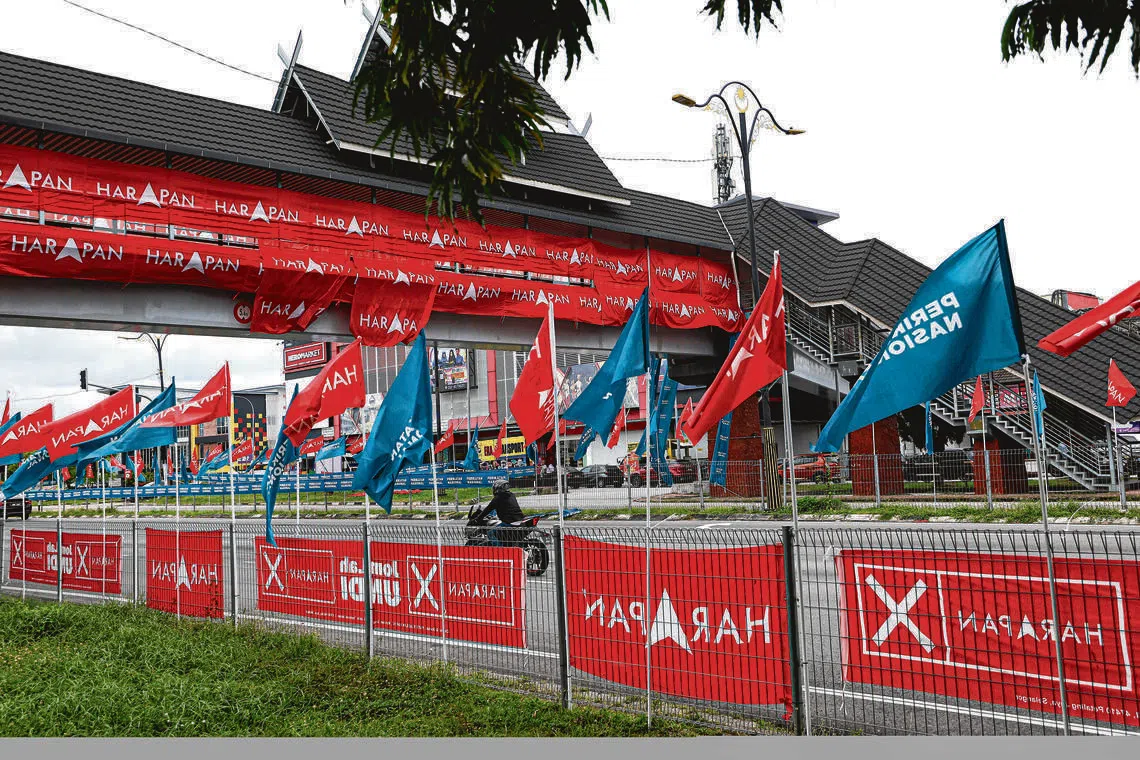
Pakatan Harapan will again face Perikatan Nasional, which will ally itself with Barisan Nasional, in the Negeri Sembilan state election.
PHOTO: BERNAMA
Muzliza Mustafa
Published
- Negeri Sembilan state election will be held on Aug 1, with 103 candidates contesting 36 seats after the assembly was dissolved on June 5.
- Main coalitions are PH contesting all seats, BN contesting 25, and PN contesting 11 with a formal seat-sharing pact to avoid splitting votes.
- Key issues include the cost of living and economy, with important battles in Pertang, Chennah, and Linggi; results will be available on the Election Commission portal.
SEREMBAN – Less than a month after Barisan Nasional (BN) defended Johor from Pakatan Harapan (PH), attention has shifted to neighbouring Negeri Sembilan, where another state election could provide the clearest test yet of Malaysia’s rapidly shifting political alliances ahead of the next general election.
Home to about 1.2 million people, Negeri Sembilan lies just south of Kuala Lumpur.
The state covers an area of 6,642 sq km, about nine times the size of Singapore.
A total of 889,490 voters will decide the fate of 103 candidates contesting the 16th state election.
Here is your no-fuss guide to what is going on, compiled by The Straits Times.
When will voters cast their ballots?
Nomination Day was held on July 18, kicking off a 14-day campaign that ends at 11.59pm on July 31.
Early voting will take place on July 28 for police, military personnel and election workers, while polling is on Aug 1.
The Election Commission announced the dates on June 12 after caretaker Menteri Besar Aminuddin Harun dissolved the state assembly on June 5.
Which are the main coalitions contesting?
The incumbent coalition in the state is PH. The multi-ethnic ruling coalition, led by Prime Minister Anwar Ibrahim, is contesting all 36 seats.
BN, which is PH’s partner at the federal level, is looking to replicate its Johor performance by contesting 25 seats.
Meanwhile, opposition coalition Perikatan Nasional (PN) is contesting 11 seats under a formal electoral understanding aimed at avoiding direct contests between itself and BN. Parti Pribumi Bersatu Malaysia remains a member of PN, but will be contesting 24 seats under its own logo due to a rift with ally Parti Islam SeMalaysia (PAS).
Instead, Bersatu splinter Parti Wawasan Negara, led by Hamzah Zainudin, will take Bersatu’s place in the coalition by contesting in four seats under PN. This is its first election after becoming a member of the opposition coalition.
They are joined by smaller parties such as the Socialist Party of Malaysia, Malaysian Orang Asli Party and Parti Berjasa Malaysia.
The youth-centric Malaysian United Democratic Alliance and the fledgling Parti Bersama Malaysia will not be joining the fray after failing to make a mark in the Johor state election.
Twenty-one constituencies will see three-cornered contests, while two seats will feature four- and five-cornered fights.
Why is there a state election instead of a general election?
Malaysia has two main types of legislature – the federal Parliament and the state legislative assembly (Dewan Undangan Negeri or DUN). The party that commands the majority in Parliament can form the federal government and name a prime minister from its winning MPs.
In comparison, there are 36 seats in Negeri Sembilan’s legislative assembly, and the party that wins a simple majority of 19 seats can form a state government and name a Menteri Besar – the chief minister – with the assent of the state’s Malay ruler.
In the past, general elections have been held in conjunction with state elections. But the heads of government for both federal and state administrations can choose when to dissolve their legislature within a five-year span.
After Negeri Sembilan, attention is expected to turn to Melaka and Sarawak before Malaysia heads to a general election due by early 2028.
What are the hot-button issues?
The campaign has focused largely on bread-and-butter issues, particularly the rising cost of living and the economy.
But the election comes as the state remains in the national spotlight following a recent royal succession dispute that drew renewed attention to Negeri Sembilan’s unique constitutional monarchy.
It is also the first election in which BN and PN have entered a formal seat-sharing arrangement, dividing constituencies between themselves to avoid splitting the anti-PH vote.
For PH, the stakes are high. A defeat would leave the coalition governing only Penang and Selangor.
Where are the key battles?
Several constituencies are expected to draw particular attention because of the candidates involved or their political significance.
Eyes are on Pertang as incumbent Negeri Sembilan UMNO chairman Jalaluddin Alias defends what is regarded as an UMNO stronghold.
Observers will also be watching Chennah and Linggi where Democratic Action Party (DAP) secretary-general Anthony Loke and Aminuddin are contesting.
How can I follow the election?
Malaysia’s Election Commission will publish official results on its election portal as counting progresses on polling night.
In the run-up to Aug 1, stay tuned to the coverage by ST’s Malaysia bureau, and follow the Asian Insider: Malaysia Edition weekly newsletter and podcast.
source: The Straits Times https://www.straitstimes.com/asia/se-asia/negeri-sembilan-goes-to-the-polls-the-coalitions-the-conflicts-and-what-to-watch?ref=asia