Tokyo on a tightrope: Japan’s impossible choices in the Iran war
Japan faces an impossible foreign policy dilemma due to the Iran war and Hormuz closure. It must balance its vital US security alliance against potential Iranian retaliation, requiring a difficult choice between alignment and neutrality.
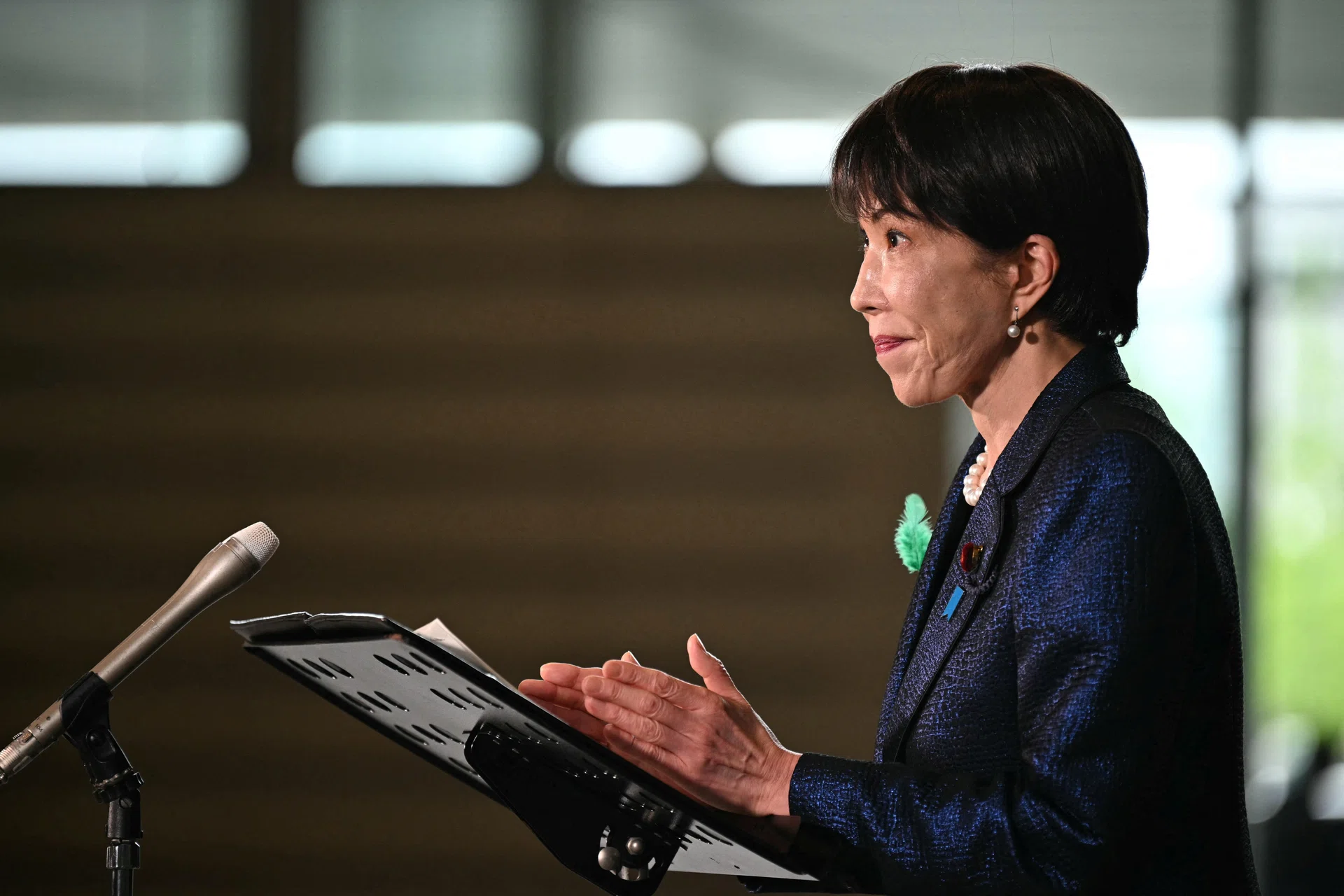
WHEN Sanae Takaichi became Japan’s first female prime minister in , she inherited a foreign policy in-tray most of her predecessors would have recognised – a rising China, a transactional American president, and a region in which Tokyo’s room for manoeuvre was steadily narrowing.
What she did not expect was a war.
On Feb 28, the US and Israel launched strikes on Iran, destroying much of Teheran’s military and political leadership, including Supreme Leader Ali Khamenei.
Within days, Iran had effectively closed the Strait of Hormuz, the maritime chokepoint through which roughly a fifth of the world’s oil and liquefied natural gas normally passes, about 80 per cent of it bound for Asia.
For Japan, which imports more than 90 per cent of its crude from the Middle East, the war was not a distant calamity but an immediate test.
Two months in, Takaichi’s government is performing a delicate balancing act, and it is not yet clear that the wire will hold.
Consider, first, the alliance pressure. President Trump has called on Japan, Korea and other allies to deploy warships to escort tankers through Hormuz.
The request lands at an uncomfortable angle. Under the 2015 security legislation pushed through by the late prime minister Shinzo Abe, Japan’s Self-Defense Forces gained new, though circumscribed, authority to act alongside the US military overseas.
Abe himself argued in a Diet debate that an Iranian mine-laying blockade of Hormuz could plausibly constitute a “survival-threatening situation”, triggering Japan’s right to collective self-defence.
But Abe also insisted that Japan would not exercise that right on behalf of a country that launched a preemptive war, and that is precisely the awkward category into which the current conflict falls.
Takaichi initially ruled out sending minesweepers during active conflict in March; her position has since softened, but Diet approval would still be required, and there is little political appetite for it.
The legal architecture Abe built was designed for hypotheticals about Taiwan, not for cleaning up after an American strike most Japanese voters consider reckless.
Now consider the diplomatic geometry. Japan and Iran have a quietly functional relationship stretching back decades; Abe himself flew to Teheran in 2019 to mediate between Trump’s first administration and the Islamic Republic. That channel is still open.
Japanese Minister for Foreign Affairs Toshimitsu Motegi has spoken repeatedly with his Iranian counterpart since the war began, partly to secure the safety of Japanese-flagged vessels detained in the Persian Gulf.
A former commander of Iran’s Revolutionary Guard told Japanese media NHK, in language that was meant to be heard in Tokyo, that Japanese tankers could pass through Hormuz unharmed if Japan declined to support the American war.
That is, of course, both an offer and a threat, and it captures Japan’s predicament with painful clarity. The closer Tokyo aligns itself with Washington’s military operations, the more its commercial shipping becomes a target. The further it strays, the more it strains the alliance that underwrites its security in a region where China is watching every move.
There is also a deeper, less tactical contradiction at work. Japan is the only country to have suffered atomic bombings in war; nuclear non-proliferation is not merely a policy but an element of national identity.
Takaichi has said unequivocally that Iran cannot be permitted nuclear weapons. Yet the means by which the US and Israel acted, by bombing previously inspected nuclear facilities and killing the political leadership of a state that was actively negotiating with Washington, sit uneasily with the rules-based order Japan has spent 80 years championing.
Tokyo’s official statements have therefore been a study in calibrated ambiguity: condemnation of Iranian nuclear ambitions, calls for diplomatic resolution, and conspicuous silence on the legality of the strikes themselves.
This ambiguity is sustainable for a while. Japan holds roughly 250 days of strategic petroleum reserves; the International Energy Agency has pledged a release of 400 million barrels from emergency stockpiles; recent agreements with Australia on critical minerals and energy have provided some additional ballast.
But hope is not a strategy, and ambiguity is not a posture one can hold indefinitely. If the war drags on, Japan will eventually have to choose.
It can stand more openly with the US, accepting the constitutional and political turbulence that comes with it. Or it can distance itself from the operation, and accept that the alliance will not look the same on the other side. Either choice carries costs Tokyo has so far been able to defer.
The harder question is what Japan’s tightrope reveals about the wider system. A treaty ally launches a war the host nation regards as illegitimate. The ally then asks for help. The international institutions that were supposed to mediate such moments, including the United Nations, the International Atomic Energy Agency, and the nonproliferation regime itself, appear largely as bystanders.
Tokyo’s discomfort is, in miniature, the discomfort of every middle power that built its prosperity on rules someone else is now rewriting.
Takaichi has so far walked the wire with considerable skill. The longer the war lasts, the more she will discover that skill alone does not keep one from falling.
source: The Business Times https://www.businesstimes.com.sg/opinion-features/tokyo-tightrope-japans-impossible-choices-iran-war