
Scam tracker: Trends in Singapore and how much money has been lost in 2026
In 2025, Singapore recorded 37,308 scam cases, with victims losing $913.1 million. Authorities urge public vigilance against diverse tactics, including tech support, investment, and impersonation scams, while promoting the ScamShield initiative.
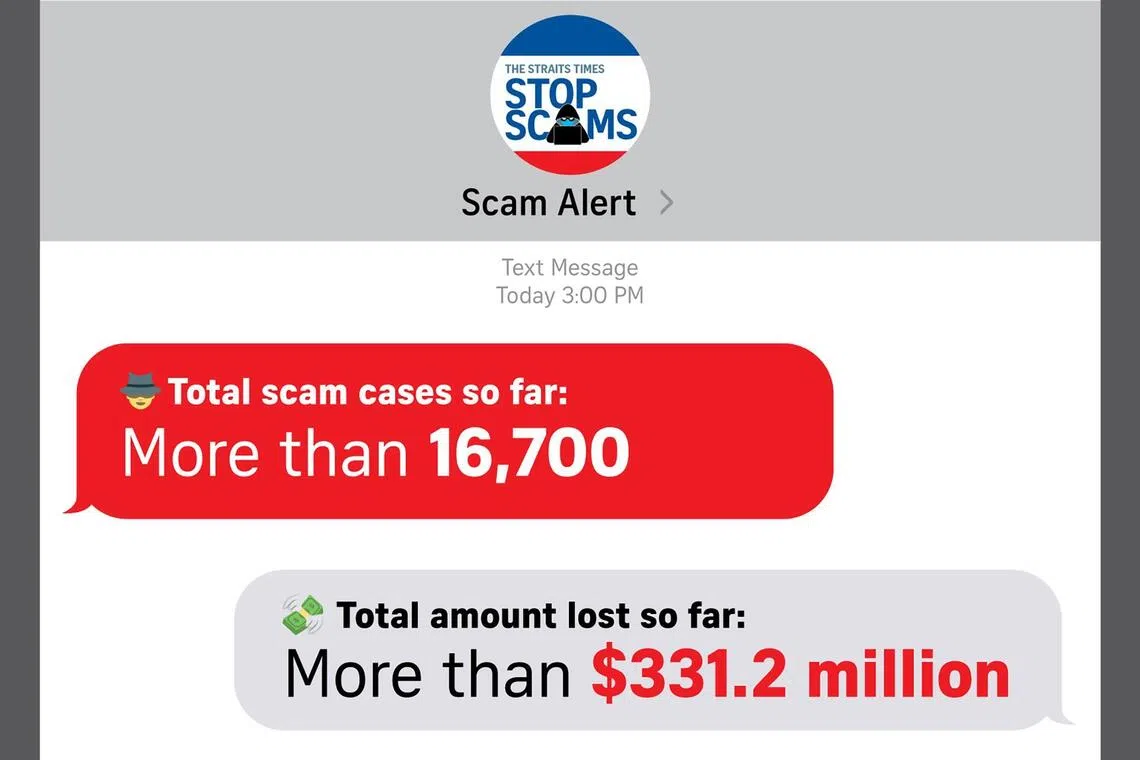
SINGAPORE – Scams are a significant problem in Singapore, having cost victims more than $4 billion since 2019.
The number of cases climbed to record highs before falling only recently for the first time in eight years.
In , there were 37,308 scam cases, with victims losing $913.1 million.
Of this amount, the police recovered about $140.5 million.
June
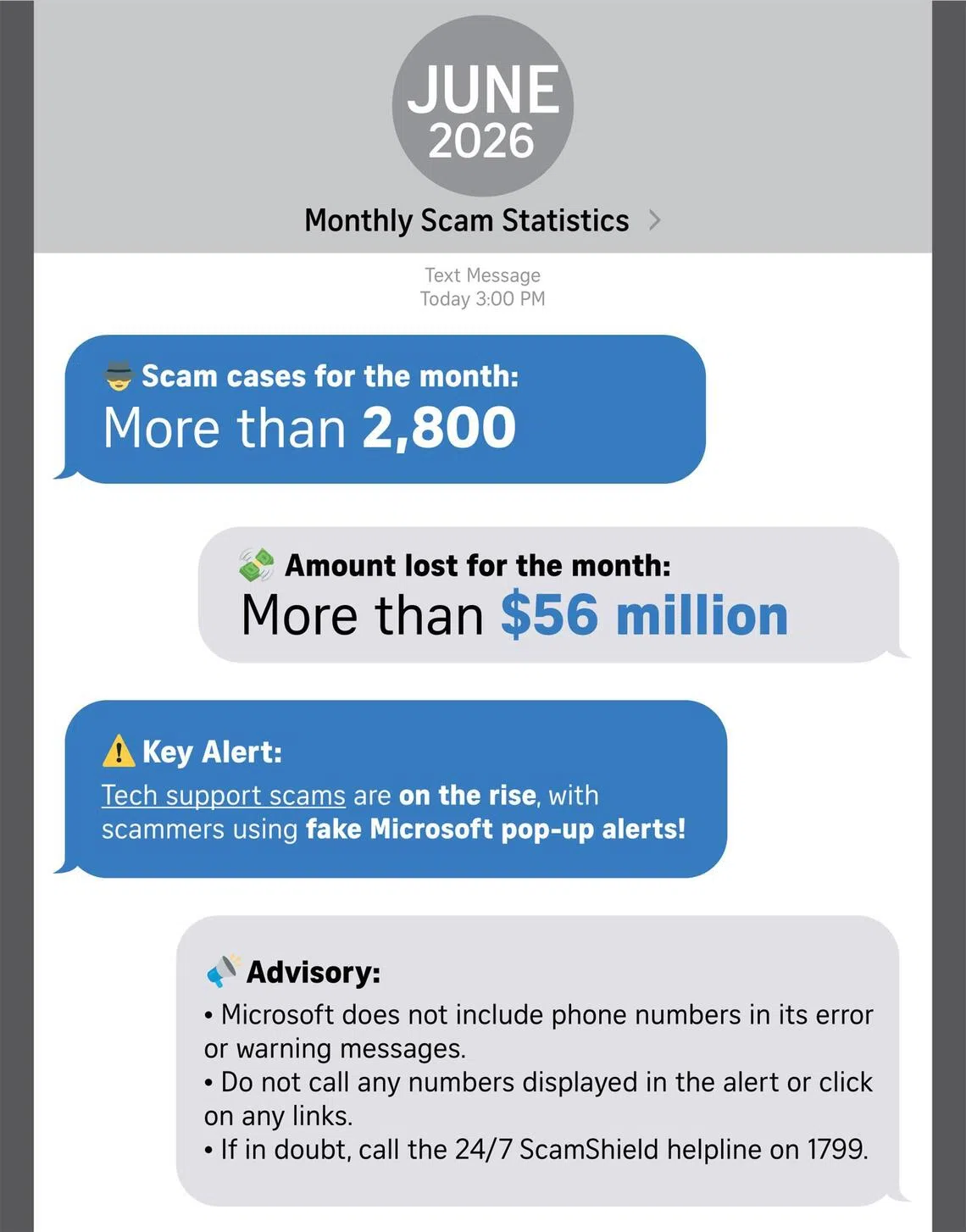
More than 2,800 scam cases were reported in June, with victims losing over $56 million.
Tech support scams have been on the rise, with victims falling prey to fake Microsoft pop-up alerts.
ST GRAPHIC: BILLY KER
Victims browsing the web would suddenly receive a pop-up alert that looks like a genuine Microsoft security alert.
The alert freezes the browser and claims that access has been blocked for security reasons.
It directs victims to contact a tech support number listed in the alert.
Those who call the number soon find themselves transferred to a scammer pretending to be a police officer, who then claims they are involved in money laundering or that their devices have been infected.
The scammer then instructs victims to provide access to their devices via remote access tools, which the scammer uses to make unauthorised transactions from the victims’ bank accounts.
The police advise people to always check the authenticity of alerts through the software provider’s official channels.
Microsoft does not include phone numbers in its error or warning messages, and those who receive such alerts should not call the numbers displayed.
May
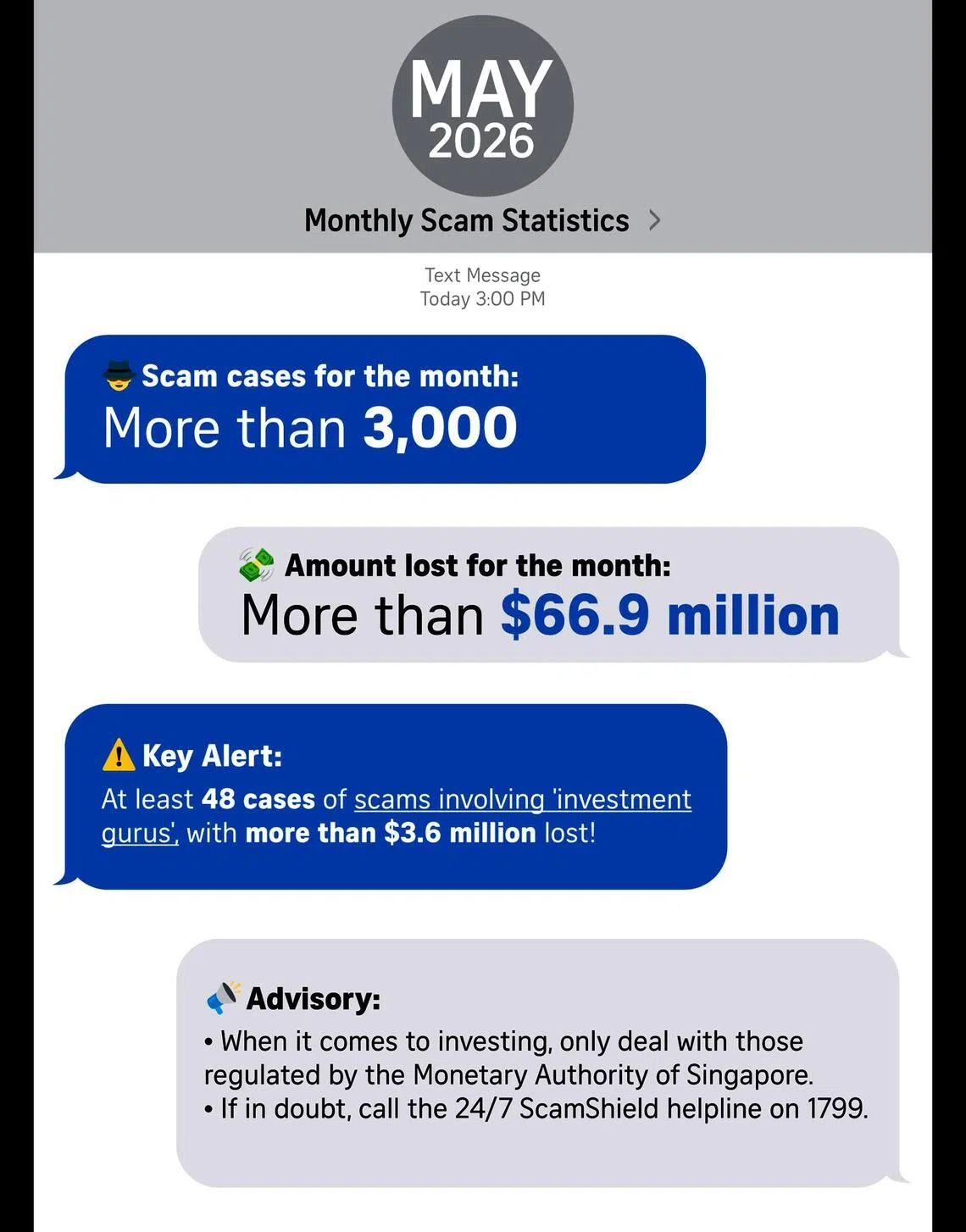
More than 3,000 scam cases were reported in May, with victims losing over $66.9 million.
At least 48 were investment scams, with victims losing $3.6 million after being lured into chat groups by fake investment experts.
ST GRAPHIC: BILLY KER
Victims came across advertisements on social media promoting free investment advice and lessons.
After clicking on the ads, they were invited to join chat groups where scammers posed as investment experts and fellow members.
The fake experts advised victims to put their money into investments on dubious platforms, while the fake members claimed they had made profits and shared screenshots of their fake earnings.
This enticed victims into using the platform and parting with their money.
They realised they were scammed only after finding that they were unable to withdraw their funds and that the scammers had become uncontactable.
The police advised people to never transfer money or hand over valuables to unknown persons, and to deal only with those regulated by the Monetary Authority of Singapore when it comes to investing.
April
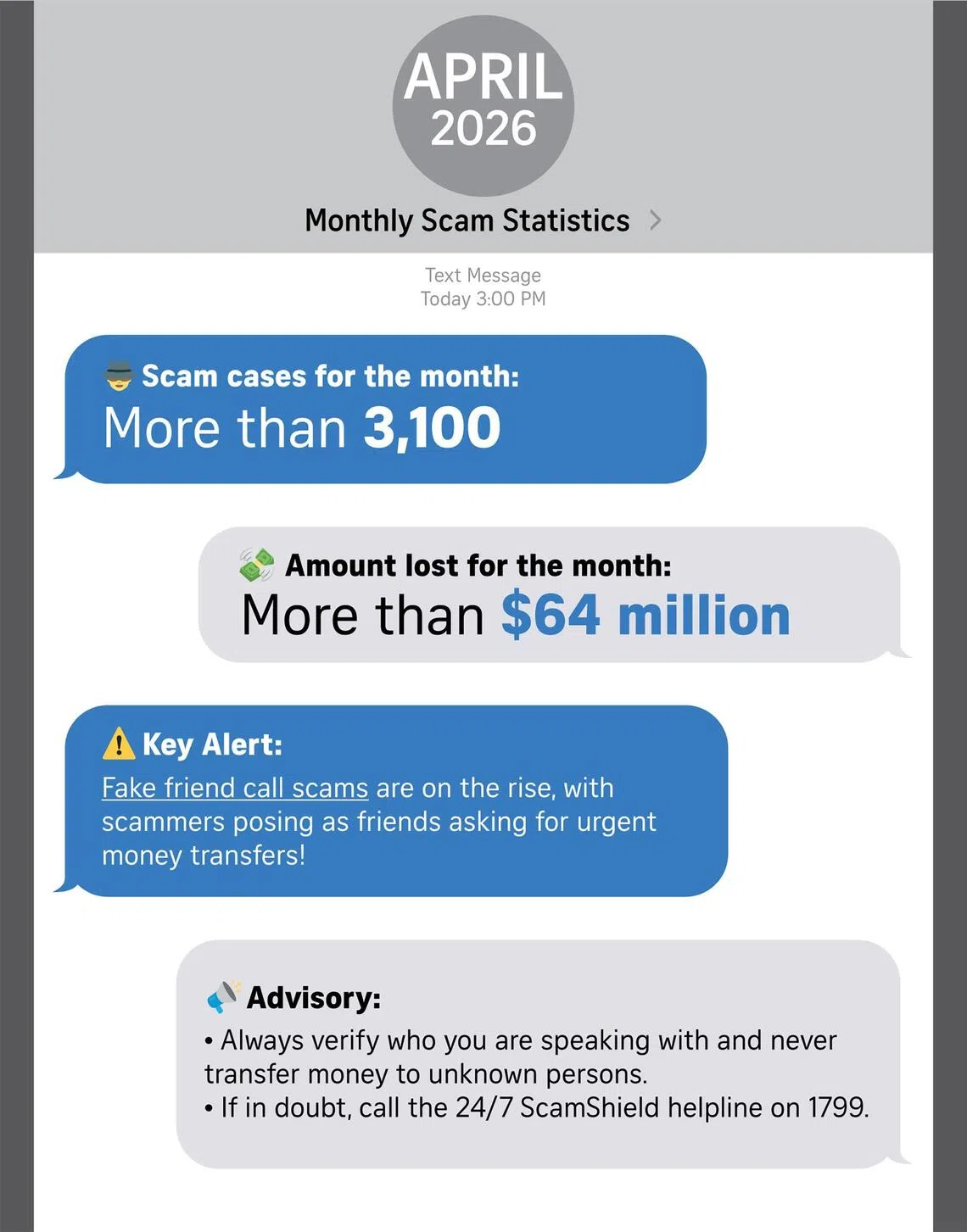
More than 3,100 scam cases were reported in April, with victims losing over $64 million.
Many of them were fake friend call scams, with scammers posing as friends of victims to trick them into making urgent money transfers.
ST GRAPHIC: BILLY KER
Victims received unsolicited calls or messages from scammers posing as friends and asking them to guess their identity. The scammers claimed they had lost their mobile phone and changed their phone number.
The scammer would then adopt the identity of the person mentioned by the victim, building rapport with them before requesting an urgent fund transfer.
The fake reasons varied from needing to pay contractors for renovation works, to opening new businesses, to paying vendors and suppliers.
In some of these cases, victims subsequently received a call from a second scammer posing as a government official, such as a police officer.
The second scammer would claim that the earlier transfer was linked to criminal activities and instruct victims to transfer their money to “safety accounts” for investigations.
Victims would discover they had been scammed only when they contacted their actual friend and realised that friend had neither changed their contact number nor contacted them.
The police advised people to exercise caution when someone asks for urgent financial help and to always make further checks to verify the identity of the person they are speaking to.
March
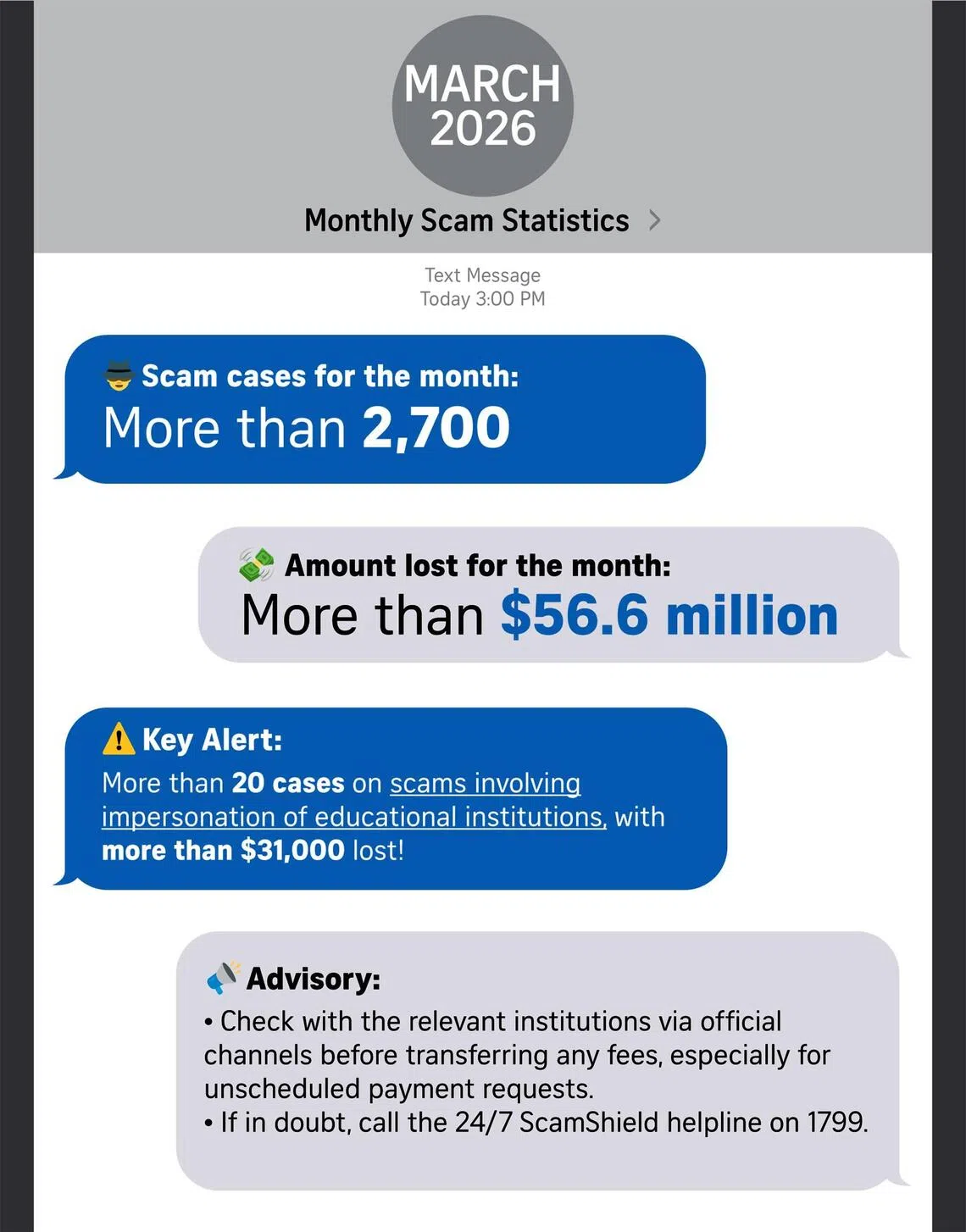
There were more than 2,700 cases of scams reported in March, with victims losing over $56.6 million.
At least 20 of these cases involved the impersonation of educational institutions, with victims losing $31,000.
ST GRAPHIC: BILLY KER
Victims received e-mails requesting urgent payment of outstanding school or tuition fees, warning them that failing to do so quickly would result in legal action against them.
These were sent from compromised student accounts or from e-mail domains similar to the official accounts of educational institutions.
The e-mails contained text documents that looked like real payment letters, and included bank account details to send money to.
As these were text documents that were sent as an attachment, they were able to bypass weaker spam filters.
Victims only realised they were scammed after seeking verification from their school, or after receiving relevant alerts and anti-scam advisories.
The police advised people to exercise caution when receiving e-mails requesting payment, and to check with the relevant institutions via official channels before transferring any fees.
February
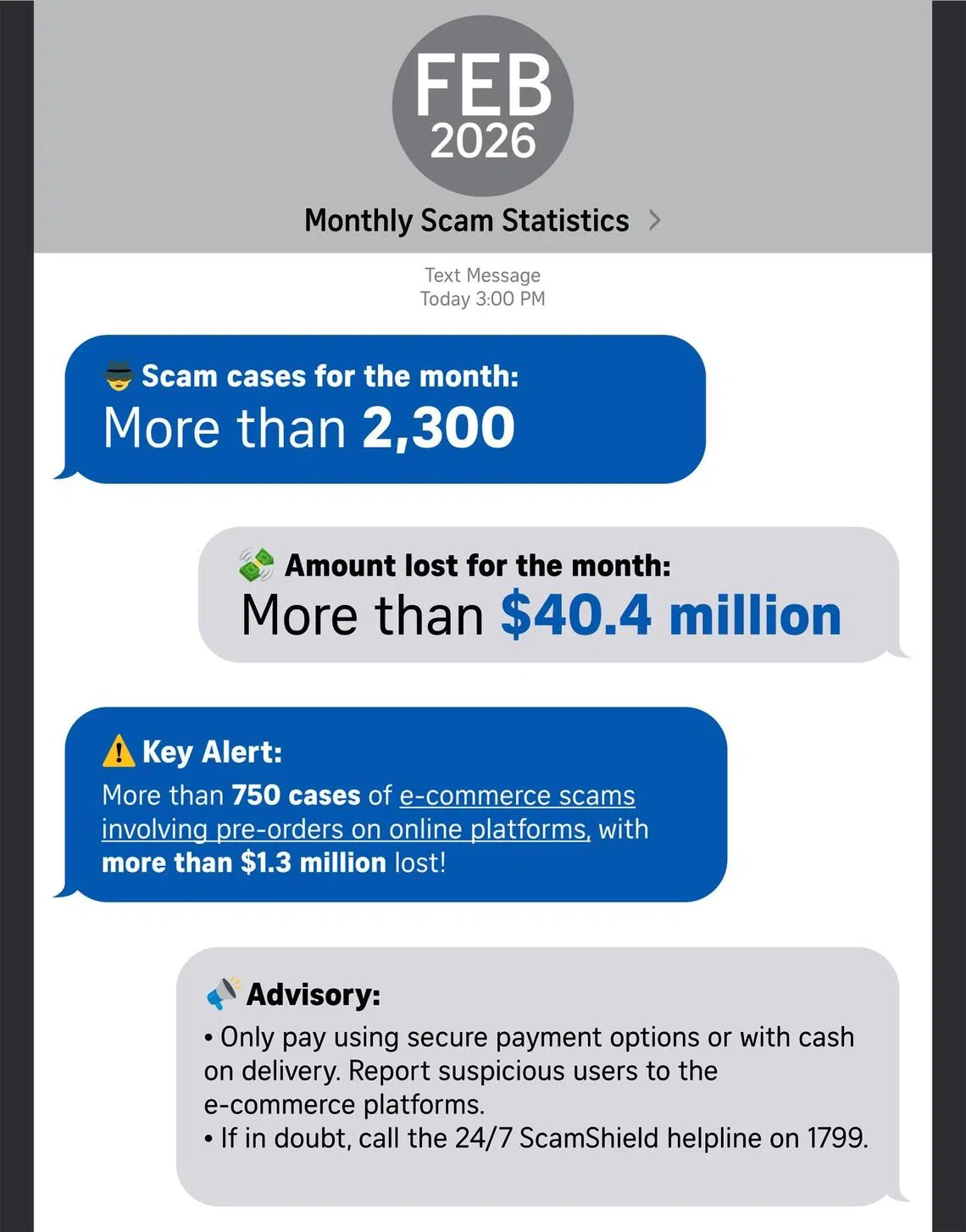
There were more than 2,300 cases of scams reported in February, with victims losing over $40.4 million.
Over 750 of these cases were e-commerce scams that involved pre-orders on online platforms, with victims losing more than $1.3 million.
ST GRAPHIC: BILLY KER
On online platforms like Carousell, victims came across ads for pre-orders for items such as Pokemon trading cards or K-pop items.
When they expressed interest, scammers persuaded them to make deposits or advanced payments.
Delivery of the items was promised on specific dates, which were typically months away.
Victims would only realise they were scammed after failing to receive the items, or when the sellers became uncontactable.
The police reminded people to only pay using secure payment options, such as those offered by the e-commerce platform.
Alternatively, they should pay with cash on delivery, which allows them to inspect the products before making payment.
January
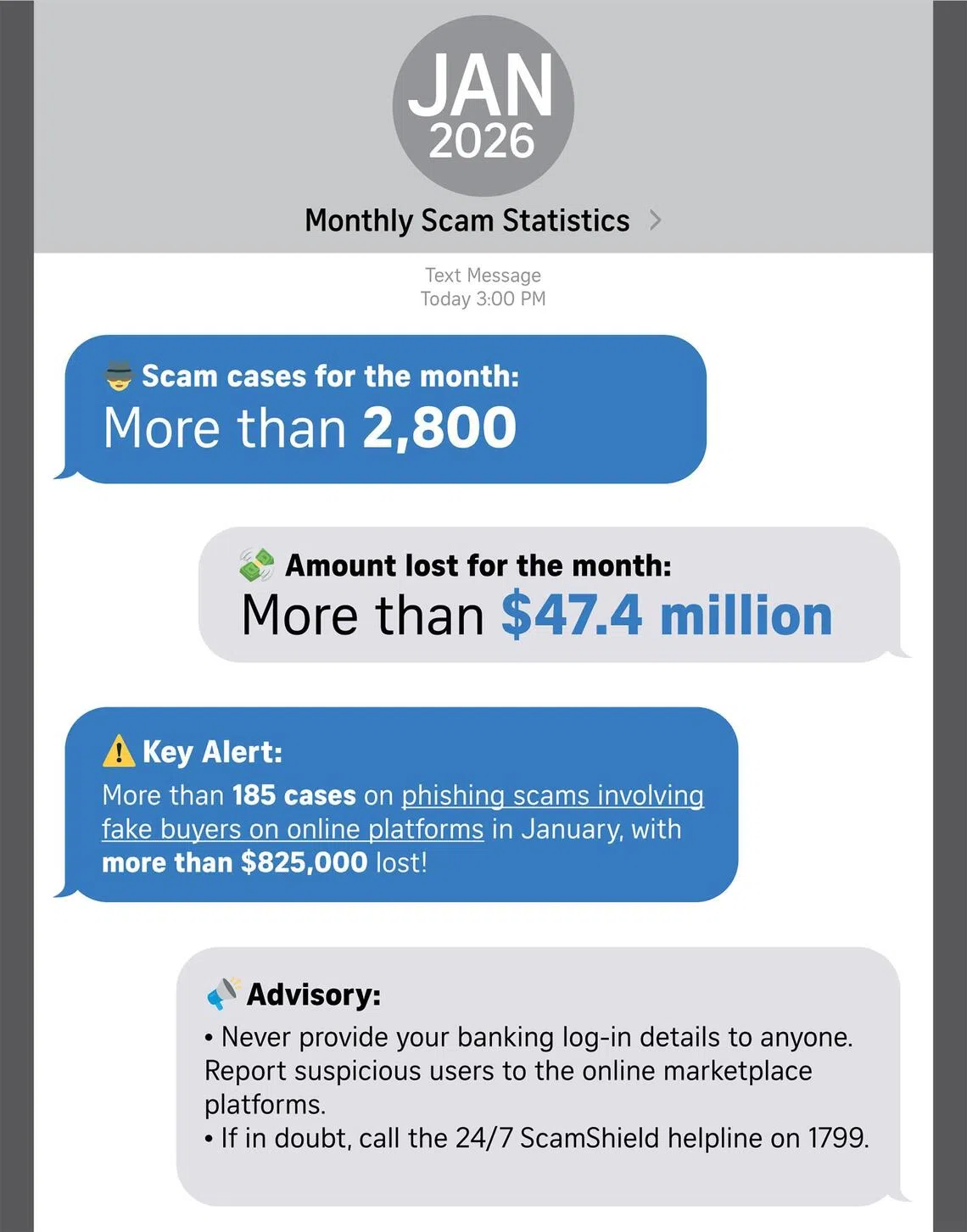
There were more than 2,800 cases of scams reported in January, with victims losing over $47.4 million.
More than 185 of these cases were phishing scams involving fake buyers on online platforms, in which victims lost more than $825,000.
ST GRAPHIC: BILLY KER
Scammers approached victims on Carousell or Facebook Marketplace, indicating interest in items being sold.
They impersonated either the platform itself or an intermediary like Lalamove, sending fake messages or e-mails with phishing links supposedly to confirm the sale of the items.
Victims clicked on the links and provided their banking or card credentials, thinking these would be used to receive the proceeds of the sale.
They realised they were scammed only after finding unauthorised transactions on their cards and accounts.
The police reminded people to never provide their banking login details to anyone. They should check links to websites carefully, and report fraudulent transactions to the bank immediately.
ScamShield
First launched as an app in 2020, ScamShield has become a core initiative in Singapore’s fight against scams.
It was relaunched in 2024 as the ScamShield Suite, bringing together anti-scam resources from the National Crime Prevention Council and police, with support from Open Government Products, a division of the Government Technology Agency.
The suite includes the ScamShield app, helpline and website.
People are encouraged to download the ScamShield app on their mobile devices to check suspicious calls, websites and messages to find out if they are scams. The app is available on both iPhone and Android.
They can visit www.scamshield.gov.sg to find out more about the latest scam trends.
Anyone who has fallen for a scam should immediately make a police report and inform their relevant financial institutions.
If in doubt, call the 24/7 ScamShield helpline on 1799.
source: The Straits Times https://www.straitstimes.com/singapore/scam-tracker-what-are-the-trends-in-singapore-and-how-much-money-has-been-lost-in-2026?ref=stop-scams